Turnover Tax was designed specifically for small businesses whose annual sales fall within a defined band, offering a simplified alternative to the standard income tax regime. For eligible businesses, it removes much of the complexity of calculating deductible expenses and depreciation that larger companies must handle.
Instead of taxing net profit, Turnover Tax is charged as a percentage of gross sales, which means a business pays based on what it earns in revenue rather than what remains after expenses. This simplicity is attractive to sole traders and micro-enterprises that do not have the capacity to maintain detailed profit and loss records.
However, simplicity comes with a trade-off: because deductions are not factored in, a business with thin margins or high costs could end up paying more tax under Turnover Tax than it would under standard income tax. It is worth periodically reviewing whether the regime still makes financial sense as a business grows.
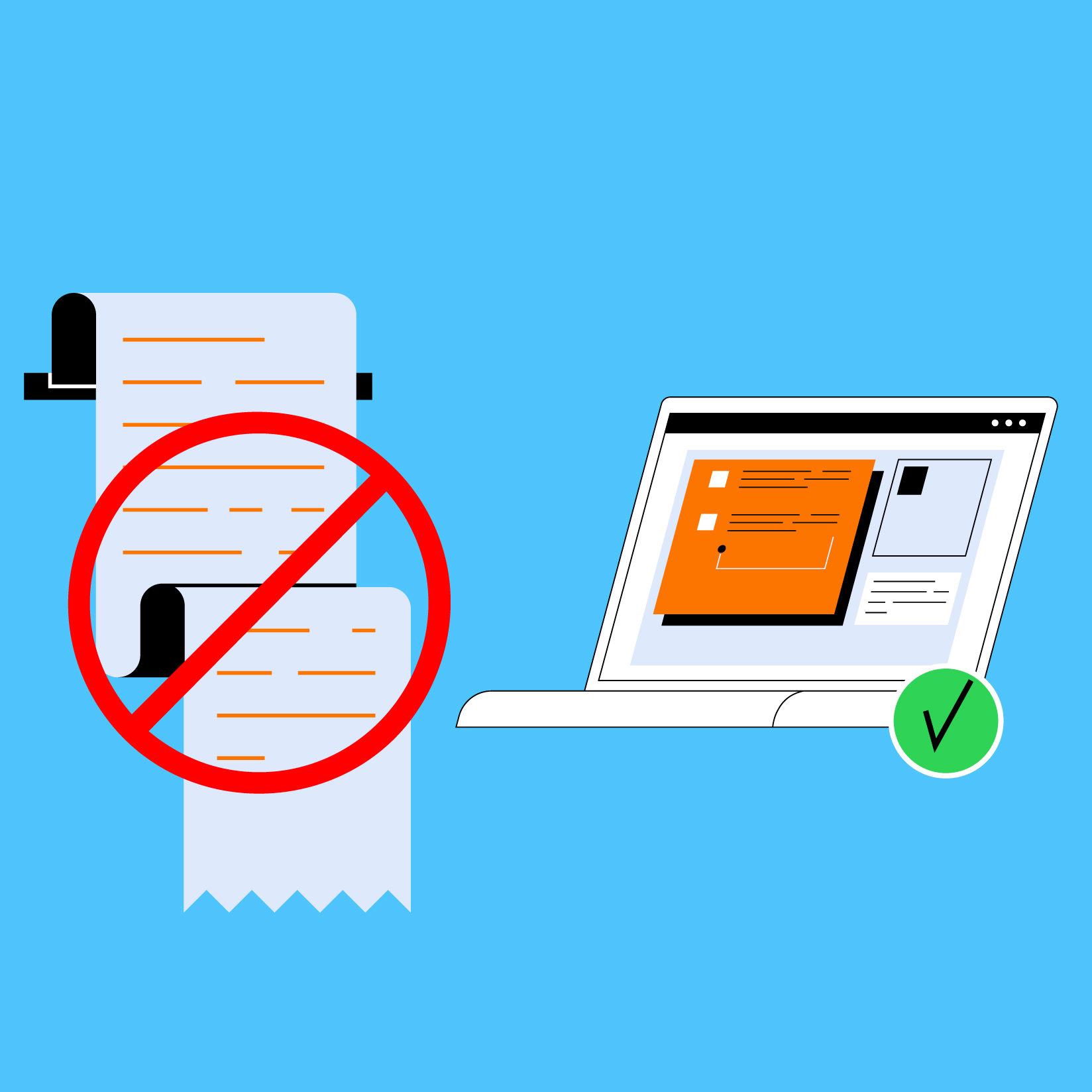
Even under Turnover Tax, keeping accurate sales records is essential, since KRA can request evidence of declared turnover at any time. Businesses that maintain digital sales records and receipts, for instance through paperlesskenya.co.ke, are far better positioned to defend their filings than those relying on memory or scattered paper slips.
Businesses that later grow beyond the Turnover Tax threshold should plan for the transition to standard tax obligations well in advance, since the shift brings added recordkeeping requirements that are easier to adopt gradually than all at once under pressure.
Businesses should also monitor how close they are getting to the Turnover Tax threshold throughout the year, since crossing it partway through a period can trigger a shift in obligations that catches unprepared owners by surprise.
Businesses that monitor their position relative to the Turnover Tax threshold avoid unpleasant surprises when their obligations eventually shift.
Reviewing tax regime options periodically, even briefly, ensures a growing business is not paying more than it needs to simply out of habit.
 Paperless